




No products in the basket.


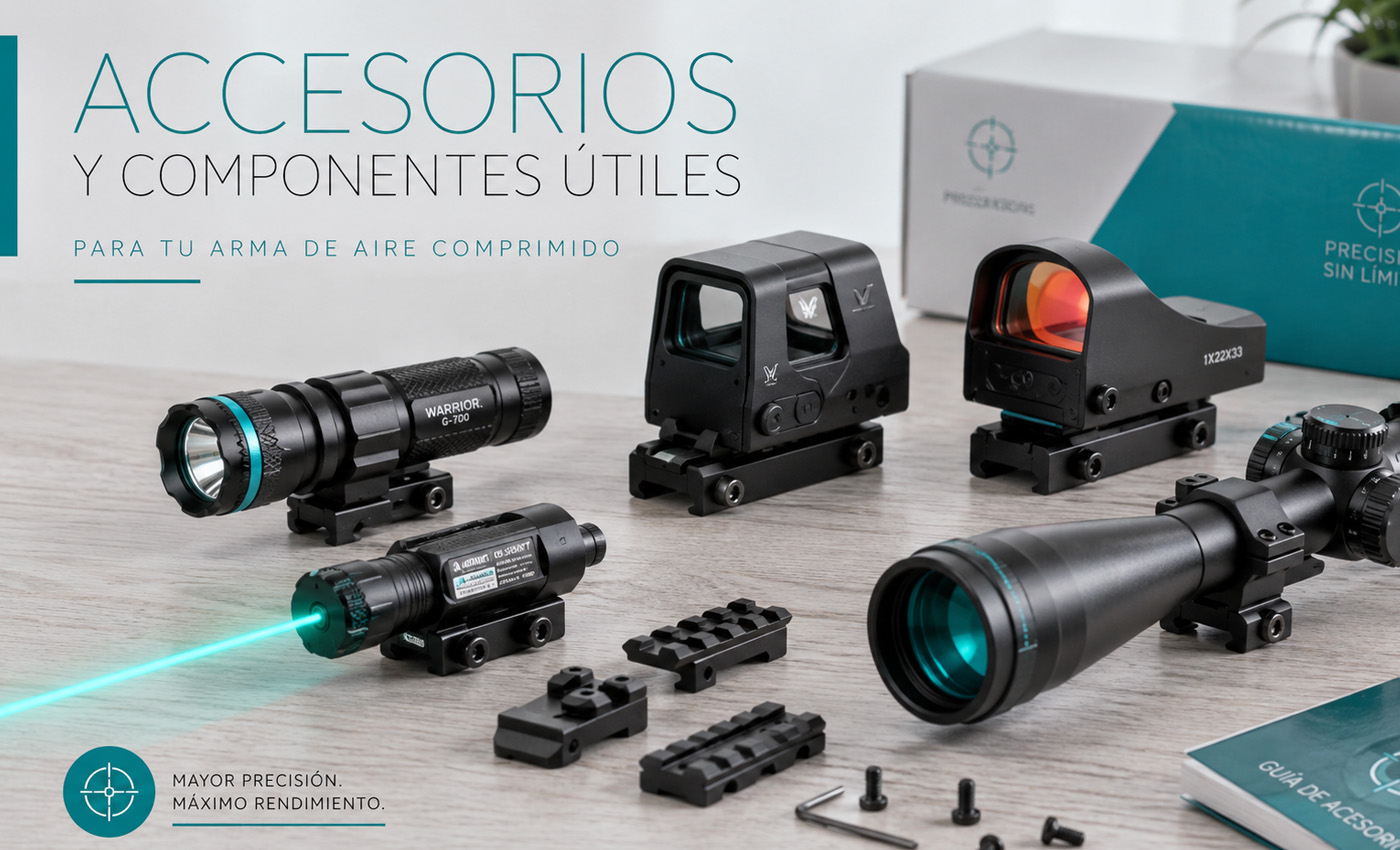
Useful Accessories and Components for Your Airgun Leave a comment
This guide is designed to help you make informed purchases. Not every accessory is necessary for everyone, but some can greatly improve accuracy, comfort, transport, safety, maintenance and the overall user experience.
Pellets
Steel BBs
Scopes
Collimators
Red dots
Lasers
Flashlights
Mounts
CO2
PCP
Before buying accessories: identify your gun
The first step is not choosing the most attractive accessory, but knowing exactly which gun you have. A spring-powered air rifle does not need the same accessories as a PCP air rifle. A 4.5 mm steel BB CO2 pistol does not use the same consumables as a diabolo pellet pistol. A scope is also useless if the mounts do not match the rail.
Simple rule: before buying any accessory, check the operating system, calibre, rail, mount compatibility, ammunition type and manufacturer’s recommendations.
The accessories you will notice most from the first day
When you are starting out, there is no need to buy everything. Some accessories genuinely improve everyday use, while others are only worthwhile if your gun, rail or intended use justifies them.
| 01 | Suitable ammunition: quality pellets and BBsAmmunition is the most important accessory. With air guns, you must always use the correct calibre: 4.5 mm pellets, 5.5 mm pellets, 6.35 mm pellets or 7.62 mm pellets, depending on the gun. CO2 pistols compatible with metallic balls use 4.5 mm steel BBs. Poor-quality ammunition can cause jams, poor accuracy or irregular feeding. |
| 02 | Targets, pellet traps and pellet catchersTargets allow you to measure groupings, correct your aim and practise in a more organised way. A pellet trap or pellet catcher helps keep the shooting area cleaner and more controlled, especially during responsible recreational use in private or authorised areas. |
| 03 | Scopes, sights and aiming systemsThis category includes telescopic sights, open sights, red dots, collimators, lasers and other aiming aids. Each has its own purpose: aiming at short range with a red dot is not the same as seeking precision with a 3-9×40 scope. |
| 04 | Gun cases, hard cases and equipment protectionA gun case protects against impacts, dust and scratches. For air rifles with a mounted scope, it is advisable to choose a taller or padded case because the scope increases the overall volume. For pistols, a hard case or gun case can be very useful for keeping the equipment organised. |
| 05 | Maintenance: seals, suitable oil and cleaningMaintenance is less eye-catching than a scope, but it prevents many problems. Seals and valves are essential in CO2 and PCP systems. With spring- or gas-piston-powered air rifles, it is important to look after the exterior, screws and assembly. Using suitable products helps preserve the gun and reduce leaks or premature wear. |
Optics and aiming area
Scope, red dot, collimator, laser or open sight: they are not the same
Aiming accessories are among the most eye-catching products, but they also generate the most questions. The correct choice depends on the distance, the type of gun, the available rail and whether you want precision, fast target acquisition or simply a more comfortable visual aid.
Different types of sights and aiming accessories
Precision
Telescopic sights
These are the most common sights for air rifles. Models such as 4×20, 4×32, 3-9×40 or 4-16×50 make aiming more comfortable at different distances.
Before choosing one, check the magnification, lens diameter, rail, mounts and whether the air rifle uses a spring, gas piston or PCP system.

Adjustment
Collimators
A collimator helps orient or check the adjustment of aiming systems. It is useful when you want an initial reference before completing the zeroing process by firing at a target.
Speed
Red dots
Red dots are designed for fast aiming at short or medium distances. Rather than providing magnification like a scope, they offer a quick visual reference.
They can be useful on pistols, compact air rifles or models with a compatible rail, provided that the mount is secure.
Reference
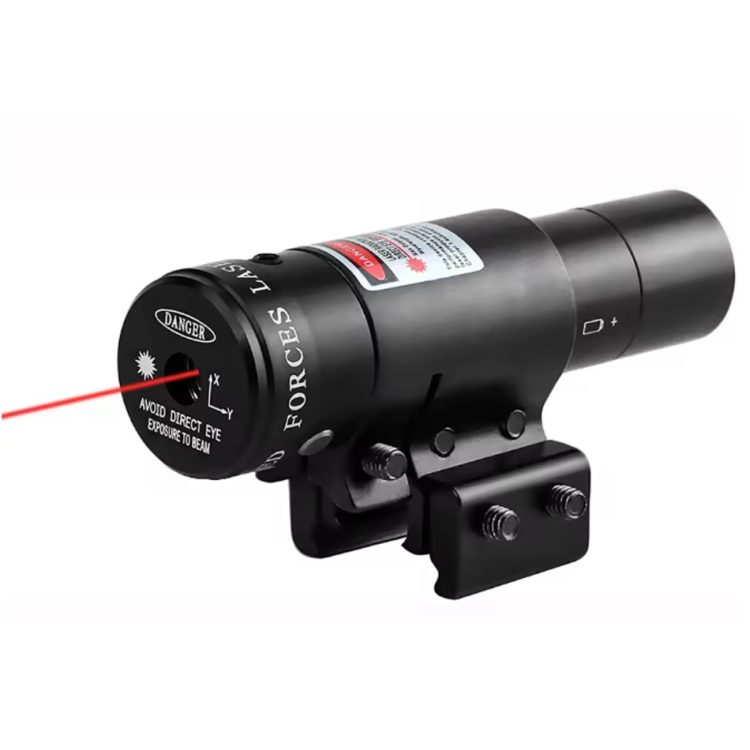
Lasers
A laser can serve as a short-range reference aid on compatible models. It does not replace good aiming technique or make the gun more accurate by itself. It must be adjusted correctly and always used responsibly.
Lighting
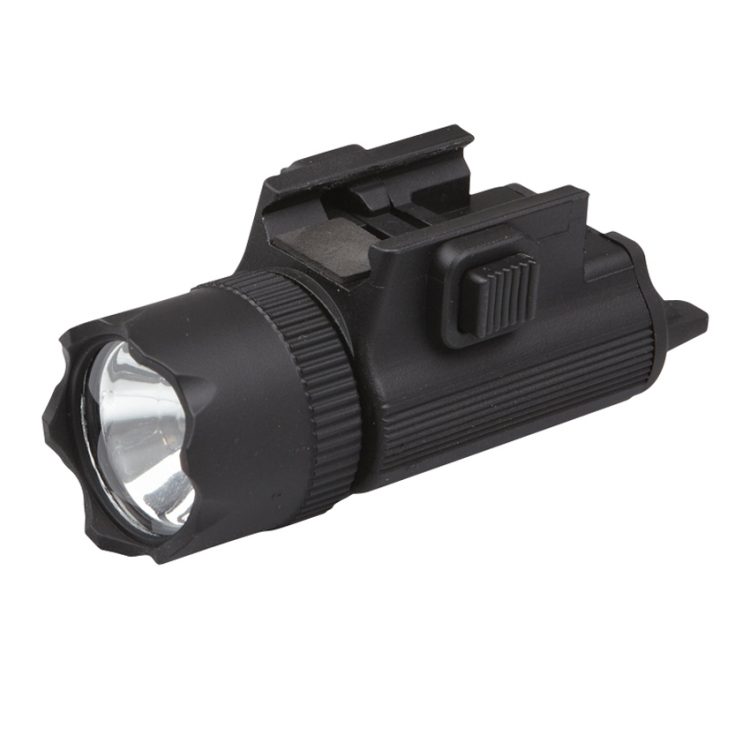
Flashlights
Flashlights can be useful for improving visibility in controlled environments, checking equipment or complementing a recreational setup. They require a compatible rail and a position that does not interfere with the grip, magazine or scope.
Mounting
Mounts and adapters
Mounts are the components that connect the accessory to the gun. You must check whether the rail is 11 mm or 20/21 mm Picatinny/Weaver.
Adapters are also available for converting from one system to another, but it is advisable to check the height, stability and compatibility.
Quick table: which accessory to choose according to your needs
Rails: the component that determines whether an accessory fits
Many accessory-purchasing mistakes are caused by the rail. A scope, collimator, laser or flashlight may appear perfect, but it cannot be mounted correctly if it does not match the gun’s rail.
11 mm rail
Very common on traditional air rifles. It is generally used for scopes with 11 mm mounts. It is frequently found on spring-powered, gas-piston and many entry-level air rifles.
20/21 mm Picatinny or Weaver rail
Very common on PCP air rifles, tactical models and modern accessories. It is usually used for red dots, collimators, flashlights, lasers, bipods and compatible scope mounts.
Important: do not force an accessory if it does not fit. If the rail does not match, look for compatible mounts or a suitable adapter. Forcing the mount can damage the accessory, mark the gun or leave the scope misaligned.
System-dependent accessories
CO2 and PCP users do not need the same accessories
Universal accessories do exist, but many components depend entirely on the gun’s operating system. A PCP requires an air-filling system. A CO2 pistol needs capsules and healthy seals. A spring-powered air rifle requires secure mounts if a scope is installed. Compatibility therefore takes priority over appearance.
Useful accessories according to the type of gun
Spring- or gas-piston-powered air rifles
- Pellets of the correct calibre.
- Targets and pellet catchers.
- Transport case.
- Durable scope if the model allows it.
- Secure 11 mm or compatible mounts.
- Exterior maintenance and screw inspection.
PCP air rifles
- PCP pump, compressor or filling cylinder.
- Compatible filling probe.
- Suitable hose and connections.
- Quality pellets.
- Scope, mounts and targets.
- Seals, pressure gauge and filling-system maintenance.
CO2 pistols
- Compatible CO2 capsules.
- Steel BBs or pellets, depending on the model.
- Targets and pellet catchers.
- Gun case or hard case.
- Suitable oil for seals.
- Additional magazines if available for the model.
Small components that prevent major problems
Not every component attracts attention, but some are essential for the gun to operate correctly. Seals, magazines, PCP probes, adapters, mount screws, hoses and sealing parts can make the difference between a comfortable experience and an unnecessary fault.
Seals
Important in CO2, PCP and gas-powered systems. A dry, dirty or damaged seal can cause leaks and loss of pressure.
Magazines
They provide more autonomy during use and can solve problems if the original magazine is damaged or feeds incorrectly.
PCP probes
Required on many PCP air rifles to connect the filling system to the pre-compressed air cylinder.
Hoses
They connect the pump, compressor or cylinder to the filling system. They must be compatible with the pressure and connection.
Rail adapters
They allow accessories to be installed when the gun’s rail and the accessory do not match directly.
Mounts
A weak or incorrect mount can cause a scope to move, lose its adjustment or become misaligned.
Lasers and flashlights: useful, but only when appropriate
Lasers and flashlights are popular accessories because they give the equipment a more complete appearance, but they are not always necessary. They make sense when the gun has a compatible rail and when their use is justified in a safe and permitted environment.
Laser
It can serve as a visual reference at short range. It must be correctly adjusted and used with great responsibility. It must never be aimed at eyes, people, animals, vehicles or reflective surfaces.
Flashlight
It can help illuminate a controlled area, inspect the surroundings or complement a recreational setup. It is advisable to check the battery, size, mounting system and position on the rail.
Responsible-use advice: these accessories must not be used to intimidate, harass or aim at other people. Their use must be limited to safe, private or authorised environments, always complying with the applicable regulations.
Recommended basic kit according to your situation
A simple way to avoid buying too much is to think in terms of kits for specific needs. These are not fixed bundles, but groups of accessories that usually make sense together.
Simple use
Starter kit
- Correct ammunition.
- Targets.
- Pellet catcher.
- Safety glasses.
- Basic gun case.
For whom: users starting out with an air rifle or air pistol.
Greater accuracy
Aiming kit
- Suitable scope.
- Compatible mounts.
- Zeroing targets.
- Quality pellets.
- Lens cloth.
For whom: users who want to improve groupings and aiming comfort.
Advanced system
PCP kit
- Pump, compressor or cylinder.
- Compatible probe.
- Suitable hose.
- Quality pellets.
- Seal maintenance.
For whom: users with a PCP air rifle or those planning to buy one.
Common mistakes when buying accessories
- Buying accessories only for their appearance: compatibility and usefulness are what matter.
- Failing to check the rail: 11 mm and 20/21 mm are not the same.
- Choosing a scope without suitable mounts: the scope needs a secure base.
- Confusing steel BBs with pellets: they are not the same ammunition.
- Buying a PCP without a filling system: without a pump, compressor or cylinder, you will not be able to fill it.
- Using unsuitable oils: some products can damage seals or rubber components.
- Installing lasers or flashlights without checking compatibility: the rail, position and mounting system matter.
- Choosing a gun case that is too tight: if the air rifle has a scope, it needs more space.
Frequently asked questions about air-gun accessories
Which accessories do I need to start using an air rifle?
The basic equipment usually includes ammunition of the correct calibre, targets or a pellet catcher, safety glasses and a transport case. To improve your aim, you can add a scope with compatible mounts.
What is the difference between a scope, red dot and collimator?
A telescopic sight provides magnification and is generally used for more detailed aiming. A red dot is designed for fast aiming at short or medium distances. A collimator can help orient or check the initial adjustment of the aiming system.
Can I install a laser or flashlight on any gun?
No. The gun must have a compatible rail, and the accessory must be securely mounted. It must also be used responsibly and in accordance with the applicable regulations.
Which mounts do I need for my scope?
You must check the gun’s rail, which may be 11 mm or 20/21 mm, the diameter of the scope tube and the height required to prevent the lens from touching the air rifle.
Which accessories does a CO2 pistol need?
A CO2 pistol requires compatible capsules, suitable ammunition, targets and basic seal maintenance. A gun case, hard case or additional magazine may also be useful if the model supports one.
What do I need for a PCP air rifle?
A PCP requires a compatible filling system, such as a PCP pump, compressor or cylinder. It may also require a probe, hose, suitable pellets, scope, mounts and seal maintenance.
Is it worth buying a gun case?
Yes. A gun case protects against impacts, dust and scratches. If the air rifle has a mounted scope, it is advisable to choose a case with sufficient height and length.
Which accessories improve accuracy the most?
The accessories that usually have the greatest influence are quality ammunition, a correctly mounted scope, secure mounts, suitable targets and good shooting technique. With PCP systems, using the correct pressure and appropriate pellets is also important.
Conclusion: the best accessory is the one that fits your gun
Air-gun accessories can greatly improve the experience, but only when they are chosen correctly. Pellets, scopes, collimators, red dots, lasers, flashlights, mounts, gun cases, magazines, CO2 capsules, PCP systems and maintenance products are worthwhile when they are compatible and solve a genuine need.
Before buying, check the operating system, calibre, rail, mounts, ammunition type, working pressure and intended use. A useful accessory is not the largest or most eye-catching one: it is the one that helps you use your gun more effectively, comfortably, accurately and safely.