









No products in the basket.


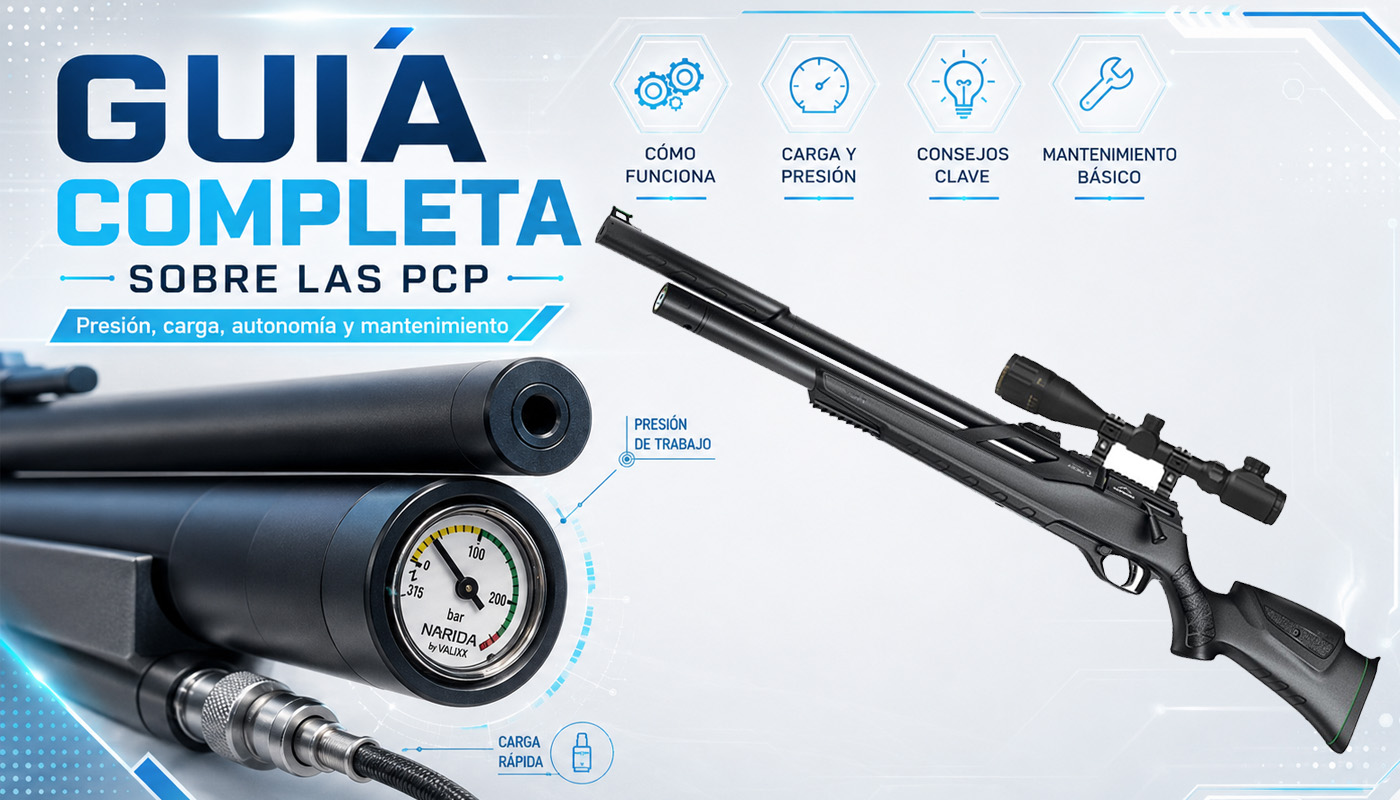
All About PCP Air Rifles: A Complete Guide to Understanding, Choosing, and Using a PCP Air Rifle or Pistol Leave a comment
Everything about PCP: complete guide to understanding, choosing and using a PCP air rifle
PCP air rifles have become one of the most popular options in the world of air guns. Their precision, smooth shooting, controlled power, autonomy and ability to use different calibres make them very attractive for sport shooting, recreational shooting and users looking for a more advanced experience than a spring or gas piston air rifle.
But it is also normal to have many questions at first: what PCP means, how a PCP air rifle is filled, what pump you need, what pressure it uses, which calibre to choose, how many shots it offers, what maintenance it requires or what differences there are compared to a spring air rifle. In this guide, we explain everything clearly, practically and in a way designed to help you choose correctly.
Quick PCP guide
Precision, autonomy and recoil-free shooting
A PCP air rifle uses pre-compressed air stored in a reservoir. That air propels the pellet smoothly and consistently, allowing more accurate shots, less vibration and a very comfortable experience compared to other air gun systems.
🌬️ Pre-compressed air
PCP works with air stored at high pressure inside an integrated reservoir or bottle.
🎯 High precision
As there is no spring striking, the shot is usually smoother, more stable and easier to control.
🔋 Autonomy
Depending on the model, calibre and working pressure, it can offer many shots per fill.
⚙️ Requires filling
To use it, you need a PCP pump, PCP compressor or compatible filling bottle.
What does PCP mean in an air rifle?
PCP means Pre-Charged Pneumatic, which can be understood as pre-compressed air. In a PCP air rifle, air is previously stored in a high-pressure reservoir. When fired, a small amount of that air is released to propel the pellet through the barrel.
Unlike a spring or gas piston air rifle, with a PCP you do not have to compress a strong spring with every shot. This makes the shot smoother, with less vibration and a very controlled feel. That is why PCP air rifles are so highly valued by users looking for precision, comfort and performance.
Quick summary: a PCP does not work with a spring or CO2. It works with compressed air stored in a reservoir, allowing smooth, accurate and very consistent shots.
How a PCP works step by step
Understanding a PCP air rifle does not have to be complicated. Think of it as a stored-air system that releases small doses of pressure with every shot.
1
The reservoir is filled with air using a pump, compressor or bottle.
2
The pressure gauge shows the available pressure inside the reservoir.
3
The pellet is inserted, usually through a multi-shot magazine or single-shot tray.
4
When firing, a small amount of compressed air is released.
5
The air propels the pellet smoothly, steadily and without the typical spring impact.
Main parts of a PCP air rifle
Although each model may have its own characteristics, most PCP air rifles share a series of basic elements. Knowing them will help you better understand the technical specifications and choose an air rifle that is more suitable for your use.
Filling and pressure components
- Air reservoir: stores the compressed air.
- Pressure gauge: indicates the pressure inside the reservoir.
- Fill port: area where the probe or fill adapter is connected.
- Fill probe: part that allows the air rifle to be connected to the filling system.
- Regulator: in some models, it helps keep shots more consistent.
Shooting and use components
- Barrel: directly affects accuracy.
- Magazine: can be multi-shot or single-shot depending on the model.
- Bolt or side lever: used to load the next pellet.
- Trigger: affects shooting comfort and control.
- Stock: can be synthetic, wooden, tactical or adjustable.
Quick comparison: PCP vs spring vs CO2
| System | Main advantage | Point to consider | Ideal for |
|---|---|---|---|
| PCP | Precision, smoothness and stable shooting. | Requires a PCP filling system. | Users looking for performance and comfort. |
| Spring or gas piston | Simple and self-contained system. | More vibration and cocking effort. | Beginners, occasional use and simple recreational shooting. |
| CO2 | Very comfortable and easy to use. | Depends on capsules and temperature. | Pistols, plinking and comfortable recreational shooting. |
ADD YOUR PCP FILLING SYSTEM
A PCP air rifle cannot be used correctly if you do not have a way to fill the air reservoir. That is why, before buying a PCP, it is also important to choose the right filling system: manual PCP pump, PCP compressor or filling bottle.
Before buying a PCP, remember this
The air rifle is only one part of the equipment. To fill it, you need a system compatible with PCP high pressure. Choosing the right filling system will help you enjoy your air rifle much more.
💪 Manual PCP pump
It is the most affordable option and does not require electricity. It allows you to fill the air rifle manually, although it requires physical effort, especially with large reservoirs or high pressures.
Ideal for: getting started, occasional use and tight budgets.
If you want to get started in the PCP world without investing too much, a manual pump can be the simplest way to fill your air rifle.
⚡ PCP compressor
It is a very convenient option for filling PCP air rifles without effort. It is especially interesting if you use the air rifle frequently or have several PCP models.
Ideal for: regular use, convenience and fast filling.
If you want to forget about manual effort and fill your PCP faster, a PCP compressor is the most practical option.
🧯 Filling bottle
It allows several fills to be carried out quickly and comfortably, as long as the bottle is correctly filled and compatible with the PCP air rifle’s working pressure.
Ideal for: maximum convenience and long shooting sessions.
It is an interesting alternative for users who want to fill quickly, especially when they already have a suitable bottle or access to refills.
Tip: always check maximum pressure, connection, hose and compatibility before filling.
PCP traffic light: what you should check before buying
This block is a quick way to know whether a PCP air rifle suits you. If you understand these points, you will avoid many doubts before buying.
🟢 Essential
- Air rifle calibre.
- Maximum fill pressure.
- Compatible filling system.
- Type of magazine.
- Approximate autonomy.
🟡 Highly recommended
- Pressure regulator.
- Adjustable stock.
- Scope rail.
- Moderator or shrouded barrel.
- Visible pressure gauge.
🔴 Never forget
- Do not exceed the indicated pressure.
- Do not use incompatible connections.
- Do not shoot without safety.
- Do not modify power without knowledge.
- Always use suitable pellets.
Which PCP calibre to choose: 4.5 mm, 5.5 mm, 6.35 mm or larger
Calibre is one of the most important points when choosing a PCP air rifle. Not all calibres are designed for the same purpose, and choosing correctly can make the difference between a comfortable, accurate and efficient air rifle or one that does not match your real use.
The 4.5 mm calibre is usually a very popular option for precision shooting, flatter trajectories and users looking for speed and control. It is common in PCP air rifles focused on precise recreational shooting and aiming practice.
It also usually has lower air consumption compared to larger calibres, so it can offer good autonomy depending on the model.
The 5.5 mm calibre is one of the most balanced options in PCP air rifles. It offers a heavier pellet than 4.5 mm and a good combination of precision, impact and versatility.
It is a very common choice for users who want a versatile PCP, with good overall performance and a wide variety of pellets available.
The 6.35 mm calibre uses heavier pellets and is usually intended for users looking for more impact. In a PCP, this calibre can offer a very interesting experience, although it normally consumes more air and may reduce autonomy.
Before choosing it, it is advisable to carefully check the model’s power, autonomy, working pressure and recommended use.
There are PCP air rifles in larger calibres, but they are usually aimed at advanced users and require special attention to regulations, power, filling system and ammunition type.
For most recreational shooting users, 4.5 mm, 5.5 mm and 6.35 mm calibres usually cover most needs.
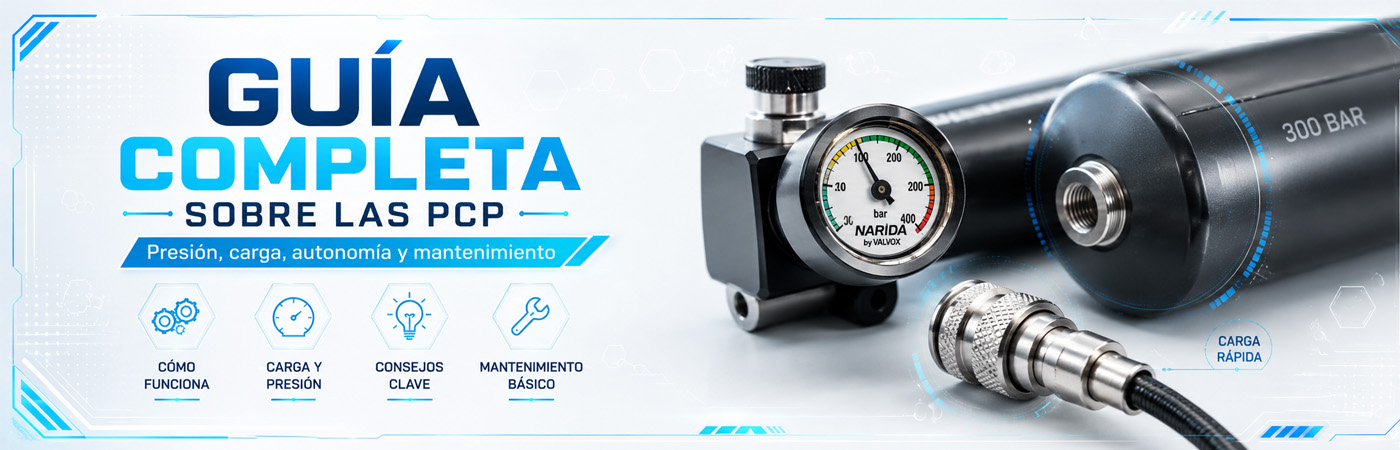
Regulated or unregulated PCP: what does it mean?
One of the words that appears most often in PCP air rifle specifications is regulator. A regulated PCP includes a system that helps deliver more consistent pressure with every shot, which can improve shot-to-shot regularity and consistency.
In an unregulated PCP, the available pressure changes as the air in the reservoir decreases. This does not mean it is a bad air rifle, but there may be more variation between shots depending on the model, the reservoir and the pressure curve.
Key fact
Regulated PCP: more consistency between shots.
Unregulated PCP: can be simpler and more affordable, but depends more on reservoir pressure.
Quick test: is a PCP for you?
Answer these questions mentally. If you choose several options from the PCP column, this system will probably suit you very well.
Choose PCP if…
- You are looking for an accurate air rifle.
- You want a smooth shot without strong vibrations.
- You are interested in an advanced and comfortable air rifle.
- You want to use multi-shot magazines.
- You like adjusting scope, stock and accessories.
- You do not mind having a pump, compressor or filling bottle.
- You want a more technical and complete experience.
Result: if you identify with these points, a PCP can be very much worth it for you.
You may prefer another system if…
- You want something very simple without filling systems.
- You do not want to depend on a pump, compressor or bottle.
- You are looking for a basic air rifle for very occasional use.
- You prefer to cock and shoot without checking pressure.
- You want to spend as little as possible on the initial equipment.
- You do not want to learn basic PCP maintenance.
- You prefer a traditional spring or gas piston system.
Result: in that case, a spring or gas piston air rifle may be more practical to start with.
Advantages of PCP air rifles
PCP air rifles stand out for offering a very smooth, accurate and comfortable shooting experience. They are especially attractive for users who want to take a step up in quality within air guns and are looking for a more advanced system.
Main advantages of a PCP
- Smooth shot: less vibration than a spring air rifle.
- Good accuracy: ideal for users looking for more consistent groupings.
- Less cocking effort: there is no need to break the barrel or compress a spring with every shot.
- Multi-shot: many models include a rotary magazine.
- Wide variety of calibres: 4.5 mm, 5.5 mm, 6.35 mm and others depending on the model.
- Compatible with scopes: many PCPs are designed to make the most of precision optics.
- Advanced experience: allows the equipment to be better adjusted to the type of user.
Disadvantages or points to consider
Although PCPs have many advantages, it is also worth knowing their less convenient points before buying. They are not complicated air rifles, but they do require more attention than a traditional spring system.
- They need a filling system: PCP pump, compressor or bottle.
- Higher initial investment: in addition to the air rifle, extra equipment may be needed.
- Pressure must be monitored: the pressure indicated by the manufacturer must always be respected.
- They require basic maintenance: seals, connectors, probes and filling areas must be cared for.
- Not all accessories are compatible: threads, probes, rails and connections must be checked.
Common mistakes when buying a PCP
- Buying only the air rifle and forgetting the filling system: a PCP needs a compatible pump, compressor or bottle.
- Not checking the maximum pressure: the pressure indicated by the manufacturer must never be exceeded.
- Choosing a calibre without thinking about use: 4.5 mm, 5.5 mm and 6.35 mm offer different experiences.
- Not checking whether it includes a magazine: some PCPs are single-shot and others are multi-shot.
- Not checking the scope rail: it may be 11 mm, 20 mm or require specific mounts.
- Not considering weight: some PCPs with large bottles or tactical stocks can be heavier.
- Using unsuitable pellets: ammunition has a major influence on accuracy, autonomy and consistency.
- Modifying power without knowledge: any technical adjustment must be carried out responsibly and in accordance with current regulations.
Basic maintenance of a PCP air rifle
🧼 Cleaning
Keep the magazine area, fill port and exterior of the air rifle clean. Avoid dirt on connectors, probes and areas where dust may enter.
🛢️ Seals and connections
Seals are important to prevent leaks. Use suitable products for PCPs and avoid oils not recommended by the manufacturer.
📉 Safe pressure
Always check the pressure gauge and respect the indicated maximum pressure. Filling above the recommended level can damage the air rifle and be dangerous.
PCP glossary so you do not get lost
| Term | What it means |
|---|---|
| PCP | Pre-compressed air system stored in a reservoir. |
| Bar | Common unit used to measure reservoir pressure. |
| Pressure gauge | Indicator that shows the available air pressure. |
| Regulator | System that helps maintain more consistent pressure with every shot. |
| Fill probe | Adapter that allows the air rifle to be connected to the filling system. |
| Quick Fill | Fast-filling system found in many modern PCPs. |
| Autonomy | Approximate number of useful shots per air fill. |
Frequently asked questions about PCP air rifles
What is a PCP air rifle?
A PCP air rifle is an air rifle that works with pre-compressed air stored in a reservoir. That air is released in small amounts to propel the pellet with every shot.
Does a PCP need CO2 canisters?
No. A PCP does not work with CO2 capsules. It uses compressed air, which is filled using a PCP pump, PCP compressor or compatible filling bottle.
What do I need to fill a PCP air rifle?
You need a compatible filling system: manual PCP pump, PCP compressor or filling bottle. You must also use the correct probe, hose or adapter for your model.
Which PCP calibre is best?
It depends on the use. 4.5 mm is usually fast and accurate, 5.5 mm is very balanced and 6.35 mm offers a heavier pellet and more impact. The important thing is to choose according to your goal, your air rifle and the autonomy you are looking for.
Is a PCP more accurate than a spring air rifle?
In many cases, a PCP can be easier to control because it does not have the vibration or recoil typical of a spring. Even so, accuracy also depends on the barrel, pellet, scope, adjustment and the user’s technique.
How many shots does a PCP give per fill?
It depends on the model, reservoir, calibre, working pressure, power and whether the air rifle is regulated or not. Some offer a few dozen shots and others can offer much greater autonomy.
Can a PCP be filled with any compressor?
No. It must be a compressor suitable for PCP and for the required working pressure. A compressor that is not designed for PCP high pressure should not be used.
Can I overfill a PCP?
You should not do so. The maximum pressure indicated by the manufacturer must always be respected. Filling above the recommended pressure can damage the air rifle and create a dangerous situation.
Which is better, regulated or unregulated PCP?
A regulated PCP usually offers more consistent shots. An unregulated PCP can be simpler or more affordable. The choice depends on the budget, the user’s level and the type of use.
Is a PCP suitable for beginners?
Yes, but it is important to understand that it needs a filling system and some basic care. For users who want precision, comfort and more advanced equipment from the beginning, a PCP can be a great choice.
The easiest rule for choosing a PCP
If you are looking for precision, smoothness and comfort: a PCP can be your best option.
If you want maximum simplicity without a filling system: a spring or gas piston air rifle may suit you better.
Conclusion: is a PCP air rifle worth it?
Yes, a PCP air rifle can be very much worth it if you are looking for a more advanced, accurate and comfortable air gun system. Its smooth shooting, absence of strong vibrations, the possibility of using multi-shot magazines and the variety of calibres make it a very complete option for users who want to take a step up in quality.
That said, before buying a PCP you must be clear that you need a compatible filling system, check the maximum pressure, choose the right calibre, use suitable pellets and carry out basic responsible maintenance. A PCP is not complicated, but it does require knowing a few concepts in order to enjoy it properly.
Find your PCP air rifle and the right filling system
At Ecommur you can find PCP air rifles, PCP pumps, PCP compressors, filling accessories, pellets in different calibres, scopes, mounts and everything you need to enjoy air guns responsibly.
Before choosing, check the calibre, autonomy, reservoir, maximum pressure, magazine type, compatible filling system, scope rail and recommended use of each model.








